
Best Orbital Polishers for Car Paint (DA vs Rotary)
A good machine polisher turns a full day of hand rubbing into a couple of hours, and it pulls out swirls and water spots that your arm never will. But the machine you reach for first matters: a dual-action (DA) polisher is forgiving enough to learn on, while a rotary spins fast enough to burn through clearcoat if you are not careful. This guide sorts the two apart and walks you to the right first machine for your paint.
Below I start with beginner-safe DA polishers, add a long-throw enthusiast pick, and keep the one rotary on the list in its own "experienced only" section. If you are pairing a machine with an abrasive, see our guide to the best buffing compounds, and for lighter marks read how to remove scratches from a car first.
Best Orbital Polishers
Every machine in the comparison below is one that a maker or a non-Amazon retailer still lists. The table shows only our current live picks; older budget models we used to list are noted further down under Previously recommended.
| Image | Product | |
|---|---|---|
PORTER-CABLE 7424XP Variable-Speed Polisher 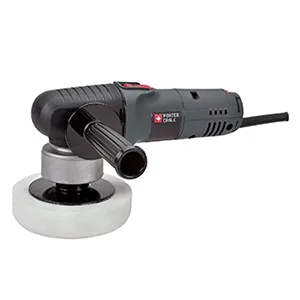 | PORTER-CABLE 7424XP Variable-Speed Polisher (best overall DA)
| |
Griot's Garage G9 Random Orbital Polisher | Griot's Garage G9 Random Orbital Polisher
| |
Chemical Guys TORQX Random Polisher Kit 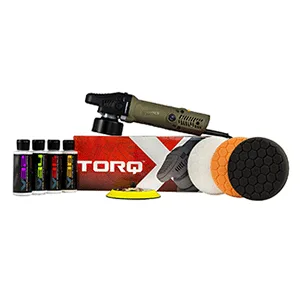 | Chemical Guys TORQX Random Polisher Kit (all-in-one)
| |
Meguiar's MT300 Professional DA Polisher | Meguiar's MT300 Professional DA Polisher
| |
RUPES BigFoot LHR15 Random Orbital Polisher | RUPES BigFoot LHR15 Random Orbital Polisher (long-throw)
| |
DEWALT DWP849X Rotary Polisher 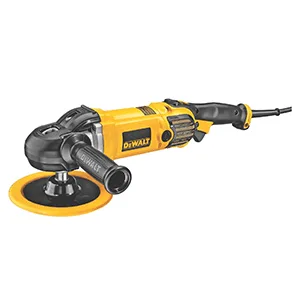 | DEWALT DWP849X Rotary Polisher (experienced only)
|
- DA vs Rotary: Which Polisher You Need
- Orbit Throw, OPM, and Pad Size
- PORTER-CABLE 7424XP Variable-Speed Polisher
- Chemical Guys TORQX Random Polisher Kit
- Griot's Garage G9 Random Orbital Polisher
- Meguiar's MT300 Professional DA Polisher
- RUPES BigFoot LHR15 Random Orbital Polisher
- DEWALT DWP849X Rotary Polisher (experienced only)
- Clearcoat-Safe Technique and Safety
- Previously Recommended
- Buying Guide and FAQ
DA vs Rotary: Which Polisher You Need
The single most important choice here is dual-action versus rotary, because it decides how easy the machine is to live with and how fast it can ruin a panel.
A dual-action (DA), or random-orbital, polisher spins its pad freely while also wobbling it around an orbit. That dual motion spreads heat and friction, so the machine is far more forgiving: if you pause in one place for a moment, it is much less likely to dig in. This is the kind of machine a first-timer should buy. It still is not burn-proof, you can thin clearcoat on a sharp edge, but it is the safe way to learn paint correction.
A rotary polisher drives the pad in one forced direction at a fixed set of RPM. It cuts fast and finishes flat in skilled hands, but that concentrated, continuous rotation builds heat quickly and can burn through clearcoat in seconds. Rotaries are for experienced users; learn on a DA first. On this list the DEWALT DWP849X is the rotary, and we keep it in its own experienced-only section for that reason.
Orbit Throw, OPM, and Pad Size
Three numbers tell you most of what you need to know about a DA. Orbit throw is how wide the pad wobbles, usually 8 to 9 mm on a standard machine and 15 to 21 mm on a long-throw unit. A bigger throw clears a panel faster but is a little less precise on tight areas; a smaller throw is easier to control around mirrors and badges.
OPM (orbits per minute) is the DA equivalent of RPM and is set by a variable-speed dial so you can start slow to spread product, then speed up to cut. Pad and backing-plate size decides your reach: a 5- or 6-inch plate is the versatile default, while smaller plates get into door jambs and bumpers. Match the pad size the maker specifies for the plate so the machine stays balanced.
1. PORTER-CABLE 7424XP Variable-Speed Polisher, 6-Inch
The 7424XP is the machine I point most first-timers to. It is a 6-inch random-orbit DA with a 4.5-amp motor and a variable-speed dial that runs from 2,500 to 6,800 OPM, so you can keep it slow while you learn and open it up once you trust your technique. Porter-Cable calls it compact and lightweight at about 5.5 pounds, which matters when you are holding it against a roof panel.
The two-position removable side handle flips for left- or right-handed work, and the machine takes common accessories on its 5/16-to-24 spindle. It is not the fastest cutter, the modest motor and standard-throw action mean long-throw machines typically correct quicker, but that same gentleness is why it is such a forgiving first polisher.
Key Points at a Glance
- 4.5-amp motor, AC only
- Variable speed, 2,500-6,800 OPM
- 6-inch pad (one polishing pad and a 5-inch counterbalance included)
- About 5.5 lb per Porter-Cable
- Porter-Cable states a "3 Year Limited Warranty, 1 Year Free Service, 90 Days Satisfaction Guaranteed"
Pros
- Forgiving, beginner-friendly dual action
- Light and easy to control
- Two-position removable handle
- Long-running, widely supported platform
Cons
- Cuts slower than long-throw machines
- Some vibration noted by owners
- Maker does not publish an orbit-throw figure
2. Chemical Guys TORQX Random Polisher Kit
If you would rather buy everything in one box, the TORQX kit pairs a random-orbital machine with pads and bottles of polish so you are not hunting for accessories on day one. It takes 3-, 5-, and 6-inch backing plates, which lets you size down for mirrors and bumpers or up for big flat panels.
Specs for this machine are worth reading carefully: Chemical Guys lists its current TORQX at 800 watts with a 9 mm dual-action throw, while earlier retailer listings show 680 watts and an 8 mm throw, so the unit you receive may be either revision. Check current availability before you count on it, too, as Chemical Guys has shown the TORQX as sold out on its own site.
Key Points at a Glance
- All-in-one kit with pads and polishes
- Compatible with 3-, 5-, and 6-inch backing plates
- Variable-speed control
- Chemical Guys lists the current TORQX at 800 W / 9 mm throw; earlier retailer listings show 680 W / 8 mm
Pros
- Everything you need to start in one kit
- Flexible 3-, 5-, and 6-inch pad sizes
- Beginner-friendly dual action
Cons
- Availability is spotty; maker has listed it sold out
- Published watt/throw specs differ between revisions
- Mid-range power compared with long-throw units
3. Griot's Garage G9 Random Orbital Polisher
The G9 is Griot's own random-orbital and a natural step up from an entry DA without leaving beginner-safe territory. Griot's gives it a 1,000-watt motor and a 9 mm orbit throw, with six speeds running from 2,000 to 6,400 OPM, so there is more muscle on tap for correction while the dual action keeps it controllable.
It runs a 6-inch vented backing plate and a long 10-foot quick-connect cord, which is a real convenience when you are working around a whole car. Griot's backs it with a "100% Satisfaction Guarantee," which is a return policy rather than a stated warranty term, so treat it as such.
Key Points at a Glance
- 1,000-watt motor
- 9 mm orbit throw
- 2,000-6,400 OPM across six speeds
- 6-inch vented backing plate, 10-foot quick-connect cord
Pros
- Strong 1,000-watt motor for a DA
- Six-speed control and a 9 mm throw
- Long quick-connect cord
Cons
- Griot's lists a satisfaction policy, not a warranty term
- Often shown on backorder; check stock
4. Meguiar's MT300 Professional DA Polisher
The MT300 is Meguiar's professional dual-action machine, aimed at owners who want a shop-grade DA. Retailers list an 8 mm orbit throw with a 3,000 to 7,500 OPM range, giving you a wide working band from spreading finishing polish up to cutting speed.
One thing to plan for: the backing plate is not included, so budget for a plate and pads in the right size before your first session. Supply has been tight at some sellers, so confirm it is in stock when you order.
Key Points at a Glance
- 8 mm orbit throw (retailer-listed)
- 3,000-7,500 OPM (retailer-listed)
- Backing plate sold separately
Pros
- Professional-grade dual action
- Wide OPM range for cutting and finishing
Cons
- Backing plate not included
- Supply has been constrained; check availability
5. RUPES BigFoot LHR15 Random Orbital Polisher
The BigFoot LHR15 is the enthusiast long-throw pick on this list. It is a 500-watt machine running a 5-inch backing plate at 3,000 to 5,000 OPM, and the longer throw lets it clear a panel noticeably faster than an 8-9 mm DA while staying a random-orbital you can control. RUPES lists it at about 5.2 pounds.
RUPES's current Mark V generation is quieter than the machines it replaces (RUPES cites 73 dB on the Mark V). Reseller listings mention an extended five-year warranty if you register within 30 days; confirm the exact terms with RUPES, as standard coverage details vary by source.
Key Points at a Glance
- 500-watt motor
- 5-inch backing plate
- 3,000-5,000 OPM
- About 5.2 lb
Pros
- Long throw cuts faster than a standard DA
- Lightweight for the performance
- Quieter Mark V generation
Cons
- Premium price for a home user
- Warranty terms vary by source; confirm with RUPES
6. DEWALT DWP849X Rotary Polisher (experienced only)
Be clear about what this one is: the DWP849X is a rotary, not a dual-action machine. It drives the pad in forced rotation, and that is why it cuts so fast and why it can burn through clearcoat in seconds if you dwell, tilt it, or lean on an edge. This is a tool for experienced users. If you are new to machine polishing, start with one of the DA machines above and come back to a rotary once your technique is solid.
DEWALT gives it a 12-amp motor and a variable-speed dial; retailers list the range as 600 to 3,500 RPM. It accepts 7- and 9-inch pads, has a soft start and electronic speed control, and includes a wool ingestion shield that keeps pad fibers out of the mechanism. DEWALT's page does not currently publish warranty terms, so confirm coverage at purchase.
Key Points at a Glance
- 12-amp rotary motor
- Retailers list a 600-3,500 RPM variable-speed dial
- Accepts 7- and 9-inch pads
- Soft start and electronic speed control
- Wool ingestion shield
Pros
- Powerful, fast-cutting rotary
- Soft start and electronic speed control
- Takes large 7- and 9-inch pads
Cons
- Forced rotation can burn clearcoat quickly
- Unforgiving; not for beginners
- Heavier to control; buttons awkward per owners
Clearcoat-Safe Technique and Safety
Clearcoat is thin, and every machine here can cut through it on an edge or a body line, a DA just gives you more margin than a rotary. These are standard detailing practices worth following whichever machine you pick:
- Tape off edges, trim, and badges before you start.
- Start on the lowest speed to spread product, then work the speed up.
- Keep the pad flat and always moving; never dwell in one spot.
- No pressure on corners or ridges, where clearcoat is thinnest.
- Do a test spot first and check your result.
- Stop if the pad or panel gets hot to the touch.
- Clean or replace pads as they load up, and keep the cord clear of the paint.
Wear eye protection against slung product, a dust mask for dry residue, and gloves. Thin, repainted, or dry factory paint burns more easily, so go gentler there. No polisher is foolproof, and deep scratches that reach primer or metal cannot be buffed out, those need touch-up or a body shop.
What Else You Need
A machine is only half the job. Pair it with the right abrasive from our best buffing compounds guide, and for lighter marks start with how to remove scratches from a car. Once the paint is corrected, protect it, our Topcoat F11 review covers a spray sealant, and you can browse more car-care guides in maintenance.
Previously Recommended
We previously listed the AutoSpa (Carrand) orbital, the ZOTA 21 mm long-throw, the Ginour/TOPVORK 900W DA, and the Tacklife buffer. We could not confirm these from the makers or any non-Amazon retailer, so we have dropped them rather than vouch for specs or availability we cannot source.
Buying Guide and FAQ
A machine polisher does three things your hands cannot: it applies product evenly, it works swirls and water spots out of the clearcoat, and it does the hard part for you so a full car is a couple of hours instead of a whole day. The trade-off is that a machine can also mar paint if you rush it, which is why the DA-first advice above matters.
DA vs rotary, which should a beginner buy?
A dual-action (random-orbital) polisher. Its dual motion spreads heat and is far more forgiving. Rotaries cut faster but can burn clearcoat in seconds and are for experienced users.
Can a DA polisher still burn the paint?
Yes, on a sharp edge or body line, or if you dwell in one spot, but it is much harder to do than with a rotary. Keep the pad flat and moving and tape off edges.
What orbit throw should I look for?
An 8-9 mm throw is the controllable standard and a good place to learn. A 15-21 mm long-throw clears panels faster but is a little less precise in tight areas.
What pad and backing-plate size do I need?
A 5- or 6-inch plate is the versatile default. Smaller plates reach jambs and bumpers. Match the pad size to the plate the maker specifies so the machine stays balanced.
Do I still need a separate compound?
Usually yes, the polisher is the tool and the compound is the abrasive. Kits like the TORQX bundle both; otherwise pick a compound from our buffing compounds guide.
Verdict
If this is your first machine, start with a dual-action polisher, the Porter-Cable 7424XP is the easiest to learn on, and the Griot's G9 gives you more power while staying beginner-safe. Want a kit with pads and polish in the box? The Chemical Guys TORQX covers that. Step up to the Meguiar's MT300 or the long-throw RUPES LHR15 when you want faster correction. Leave the DEWALT DWP849X rotary until your technique is solid, it is the fastest cutter here and the easiest to burn paint with.